
Granny Sookers
on grandmothers and onions.

My plan today was to write about the coast. I was itching for it, to stare out to sea and scribble down some profound thoughts about tides and jellyfish and birds. But, like most good plans, my plan was foiled.
I crept onto the quiet beach before the holidaymakers arrived with their buckets and spades and Bluetooth speakers. Not that there’s anything wrong with buckets and spades and Bluetooth speakers, that just wasn’t the itch that my pen was looking to scratch.
I sat on the sand, pen poised, ready to stare pensively out to sea… but my eyes didn’t get that far. Instead, they settled on the stones in front of me.


Arguably theses flint stones were quite nondescript, nothing special, even a little bit dull. And yet, my eyes were stuck on their chalky white surfaces and rounded edges. Some were near perfect spheres, and I was transported back to my grandmother’s sitting room.
My grandmother sits in a large, comfortable armchair with stacks of books all around her. There are towers of magazines, on loan from friends, filled with art, wildlife, literature, history, landscapes and gardens. To her left sits the radio times, the phone, and a jam jar full of hard-boiled peppermints.
‘Would you like a granny sooker?’, she nearly always asks. Granny sooker. Isn’t that an absurdly brilliant name for a sweet? She tells me that’s the Scottish name for these sweets, and though her Scottish lilt has long faded into southern English, it bubbles up when she says granny sooker, Edinburgh or smoked salmon. It makes me smile every time.
The granny sooker is still a popular Scottish sweet, sometimes peppermint flavoured like my grandmothers, though generally a sour apple flavour, the kind of thing children dare each other to eat without flinching or pulling a face. When the flints are cracked open, they are a shiny grey-black. The glassy black of the cracked flints winked at me in the sun, like how the dark sour granny sookers might wink at a child in a tuckshop.
The chalky white flints were strewn along the length of the bay, as if, just this morning, Granma had skipped along the tideline, emptying her jar of peppermints as she went. Most of the flint stones were huge, the size of my fist or even my head. Some are intact, perfect granny sooker shapes, others were cracked and fragmented, the sorts you find at the bottom of the jar when it needs a refill (or a trip to Marks and Spencers for more).
You can see flint cobbles (cracked and whole) on cottages, churches, schoolhouses and pubs all across East Anglia. It’s a readily available material in Eastern England, as the beach suggests, and it has been for centuries, no, millennia. Both Neolithic and Medieval man mined for flint here, crafting the ancient granny sookers into a humble fishing hut or a grand church.


Today is a bright blue day with a beating sun, but when I was last at the beach, it was grey, and the sun feebly poked through the sky, pale and well worn; a well sooked granny sooker if ever I saw one.
An oystercatcher piped an angry call from the waterline, and I’m jolted out of my grandmother’s comfy armchair back to the beach. The oyster catcher flew off, as if in a strop, away from the families who were now trickling in from the car park. I also took this as my queue to leave.

I had grandmothers on my mind as I drove home. Grandmothers on my mind as I had a cup of tea and checked my phone. Someone, somewhere, on the internet told me they had just harvested their onions, that they were ready to be picked if the stems were floppy. Panicked, I rushed outside to tend to my own onions which, indeed, had floppy stems resting on the soil.
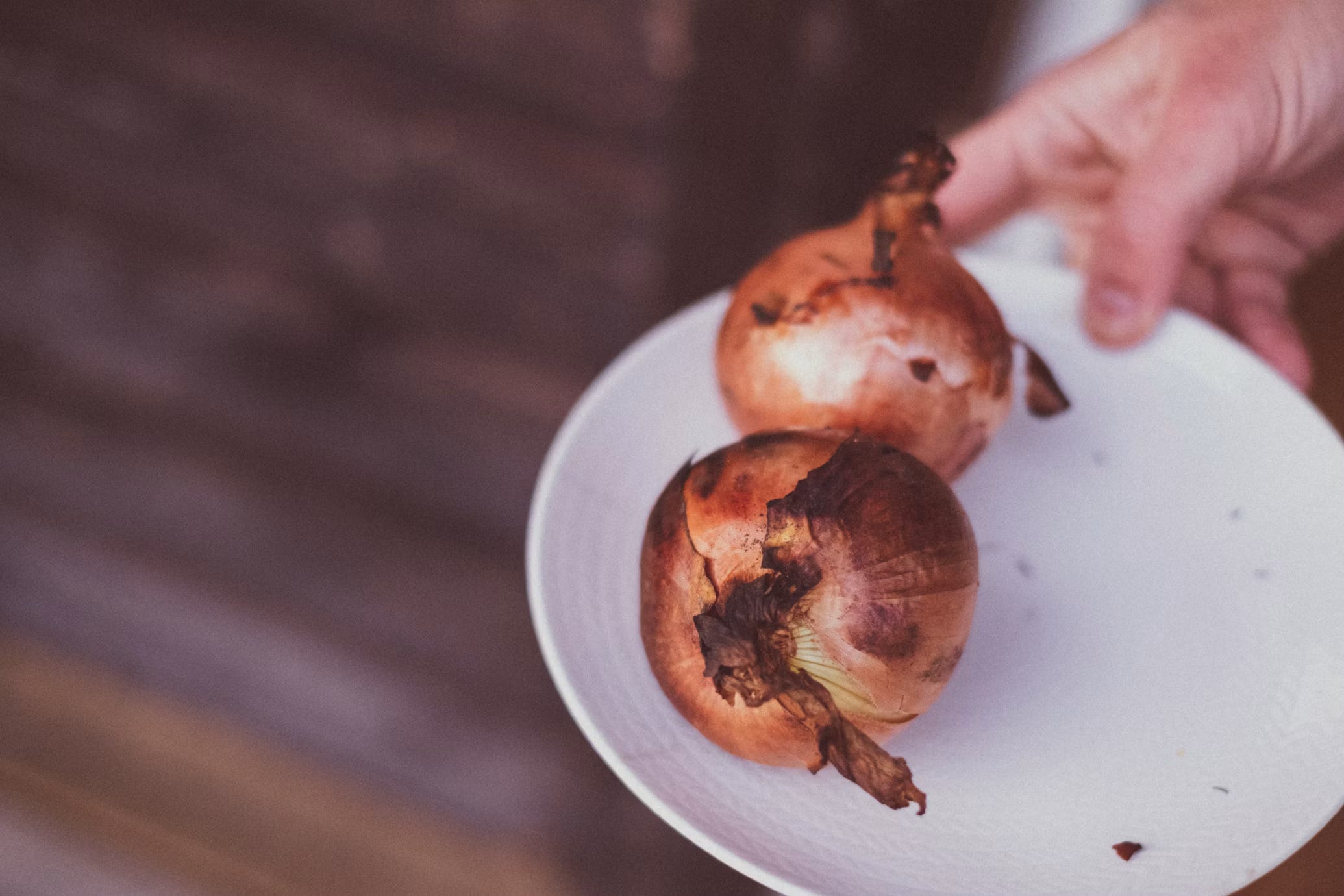
And I still had grandmothers on my mind as I tugged the onions out of the soil and peeled off their papery skins. I tossed the skins to the ground, and the wind swept them about the garden, making the most satisfying rustle as it did.
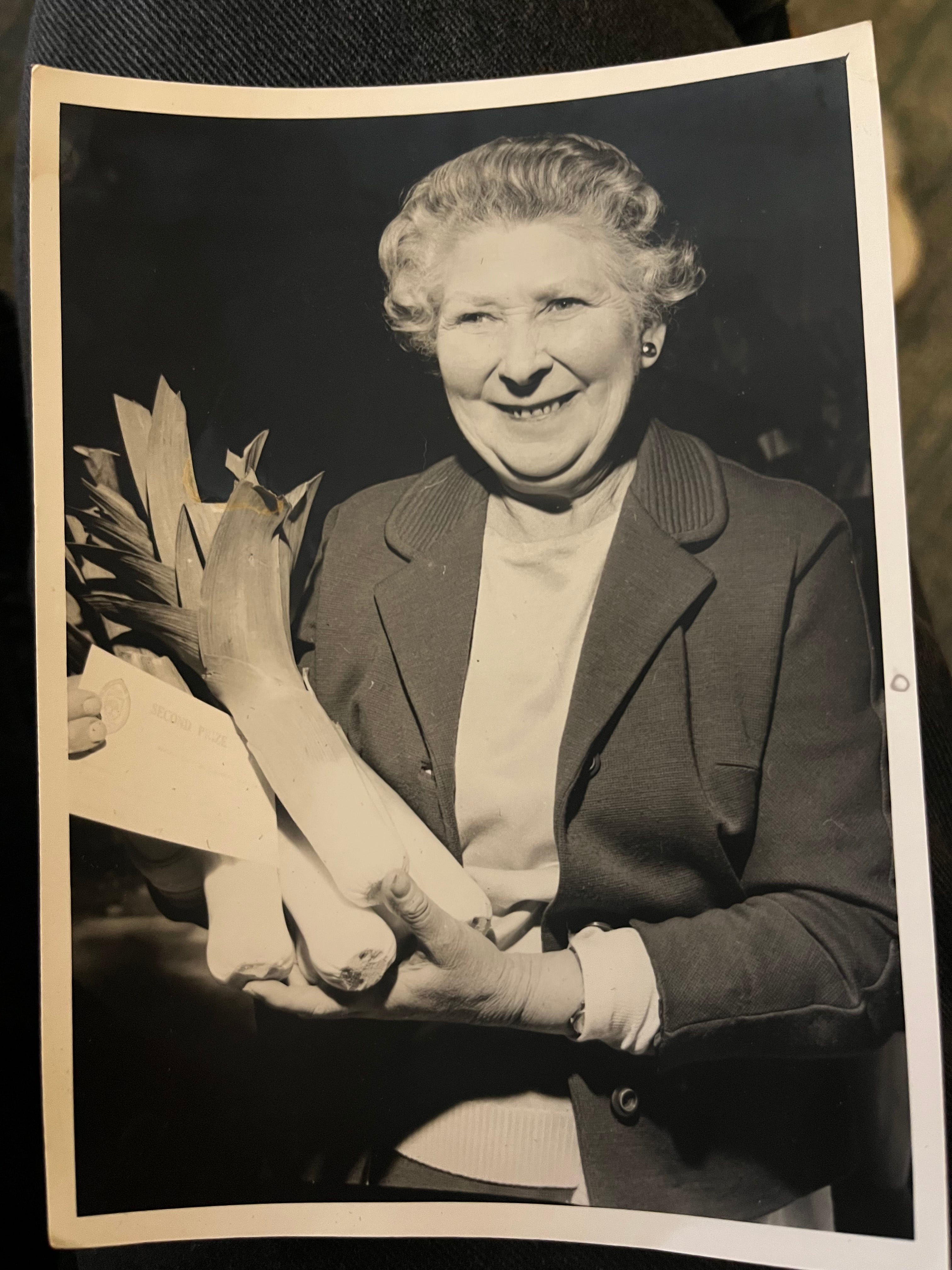
My mind now drifted to my great grandmother, Granny Kings as we still affectionately call her. I never met Granny Kings, but something tells me (okay, my dad tells me) that we would have got on well. She loved growing veg; I’ve seen a brilliant photo of her proudly holding an armful of second prize leeks at the village fete, as if they were her newborn grandchild. She loved to cook, too. She was always in her apron, always striving to perfect new recipes. Theres a great story of her eagerly announcing that she will be making a new Italian dish called les-ag-knee. We still call it lesagknee now.
As I sat peeling my onions, I thought of grandmotherhood and granddaughterhood, of motherhood too, and how love and stories seep through generations like a brandy in a Christmas cake. The simple task of harvesting onions, the tactile papery skins, the soil under my fingernails, the smile on my face, it all made me think of a poem. By Mary Oliver, of course.
Its called Answers.
Answers
Mary Oliver
If I envy anyone it must be
My grandmother in a long ago
Green summer, who hurried
Between kitchen and orchard on small
Uneducated feet, and took easily
All shining fruits into her eager hands.

That summer I hurried too, wakened
To books and music and circling philosophies.
I sat in the kitchen sorting through volumes of answers
That could not solve the mystery of the trees.

My grandmother stood among her kettles and her ladles.
Smiling, in faulty grammar,
She praised my fortune and urged my lofty career.
So to please her I studied – but I will remember always
How she poured confusion out, how she cooled and labelled
All the wild sauces of the brimming year.If you want to know more about The Nature of It, check out my about page, which details the sort of nature writing that I publish. Thanks for reading.
Such a delightful read! Especially as I’ve just returned from visiting my grandma (who always feeds me ginger biscuits!) Have you ever read The Summer Book by Tove Jansson? It’s my favourite book about a grandmother/ granddaughter relationship.
Ah I loved reading this Meerabai, thanks for sharing 😊